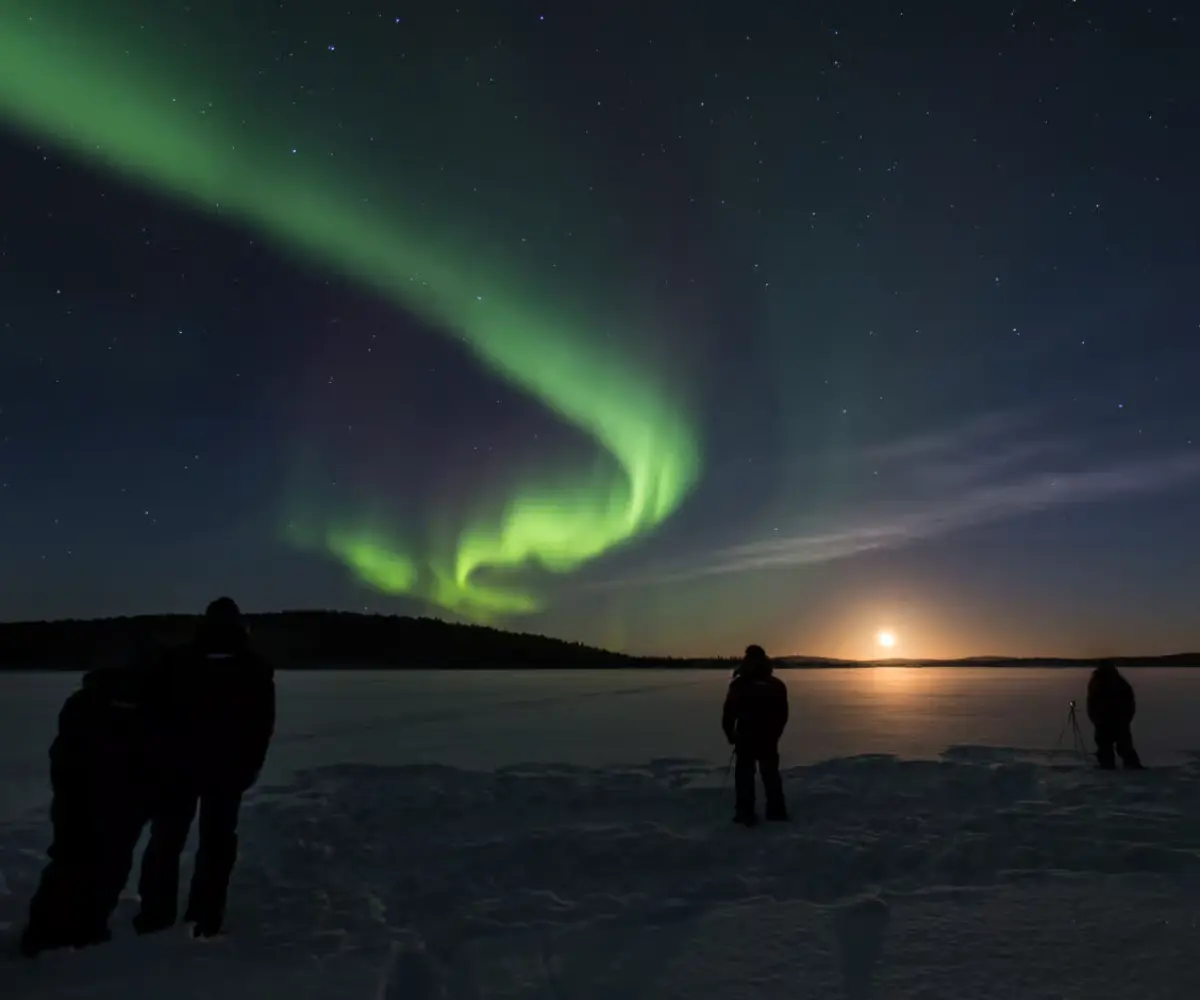
While the Aurora Borealis is often associated with snowy Christmas holidays and deep Arctic winter, the season actually begins much earlier. From September, darkness returns to the far north, bringing the conditions needed for aurora viewing while autumn colours are still transforming the landscape and temperatures can be considerably more comfortable for exploring.
For travellers looking beyond the usual summer escape, early-season Arctic travel offers a rather compelling combination: spectacular natural phenomena, fewer crowds and the chance to experience the wilderness before the full winter season arrives.
And according to Aurora Nights, you don't need to wait until December to start planning your Northern Lights adventure.
So, When Should You Go?
There's no single 'best' month for the aurora. The experience changes considerably as the Arctic moves from autumn into winter, so the right time depends on whether you're after dark skies, snow-covered landscapes, festive atmosphere or the chance to combine aurora hunting with outdoor adventures.
September: The Underrated Start to the Season
September is one of the quieter times to head north, making it an appealing option for travellers who want the aurora without the crowds of peak winter.
The nights are becoming dark enough for sightings, while daytime temperatures remain relatively mild by Arctic standards. Autumn colours add another dimension to the landscape, and there's still plenty of opportunity for hiking, photography and wilderness experiences before winter takes hold.
For those who don't necessarily picture themselves bundled up in snow from morning to night, September offers a softer introduction to the Arctic.
October: Darker Skies, Fewer Crowds
By October, nights are longer and darker, creating increasingly favourable conditions for aurora viewing. It's still outside the main festive season, too, making it a good choice for travellers looking for a quieter Arctic experience.
There's something particularly appealing about travelling at this point in the season: the wilderness feels remote and atmospheric, but you haven't yet reached the full depths of winter.
November: Winter Starts to Arrive
By November, the Arctic begins to look much more like the version many travellers imagine when they think of a Northern Lights holiday.
Snow becomes increasingly likely in Lapland, while longer hours of darkness provide more opportunities to head out in search of the aurora. It's also when classic winter experiences begin to come into their own, from husky sledding and reindeer tours to snowmobiling.
December: The Classic Arctic Escape
December is perhaps the most atmospheric time to head north, particularly for families and couples looking for a festive experience.
Snow-covered landscapes, twinkling lights and traditional Arctic activities create the quintessential winter escape. It's also one of the busiest times to travel, but for many, the combination of Christmas magic and the possibility of seeing the Northern Lights makes it worth it.
Where to Go: Four Arctic Destinations to Know
The Northern Lights are visible across a broad stretch of the Arctic, but where you choose to go can dramatically change the experience.
Finnish Lapland: For the Classic Northern Lights Escape
Finnish Lapland has become synonymous with luxury aurora travel, and it's easy to understand why.
Vast snowy forests, remote wilderness lodges and glass-roofed retreats provide the perfect setting for spending an evening waiting for the sky to come alive. Away from urban light pollution, the region offers excellent conditions for both aurora viewing and stargazing.
For a more remote Arctic experience, Kilpisjärvi sits deep in Finnish Lapland, surrounded by dramatic mountain landscapes, frozen valleys and untouched wilderness. Its remote location and minimal light pollution make it particularly appealing for travellers seeking a peaceful escape, while snowmobiling, snowshoeing and other winter adventures offer plenty to do during the day.
For something with a little more buzz, Rovaniemi provides a convenient base just below the Arctic Circle. As the official home of Santa Claus, it naturally comes with plenty of festive appeal, alongside access to guided Northern Lights excursions away from the city.
Further north, Saariselkä offers easy access to the pristine wilderness around Lake Inari, with reindeer sleigh rides, ice fishing and cross-country skiing complementing evenings spent aurora hunting.
Best months to visit in 2026: September to December
Northern Norway: For Fjords, Mountains and the Aurora
Northern Norway offers a completely different Arctic backdrop. Here, the landscape is all dramatic mountains, deep fjords and remote islands, with the Northern Lights appearing above some of Scandinavia's most spectacular scenery.
Tromsø and the Lyngen Alps are ideal for travellers who want access to expert-led aurora hunting alongside dramatic mountain scenery. Meanwhile, the Lofoten Islands and Senja offer a more remote experience, where the lights can appear above rugged coastlines and Arctic waters.
There's also a strong cultural element to travelling through Northern Norway, with opportunities to learn about Sami traditions, meet reindeer and stay in traditional lavvu huts.
And then there's Svalbard. During the Polar Night, darkness can last around the clock, meaning the aurora has the potential to appear at almost any hour. It's about as far removed from a traditional winter holiday as you can get.
Further south, Alta, around 400km above the Arctic Circle, has earned the nickname 'City of the Northern Lights' and offers a combination of wilderness, adventure and excellent opportunities for aurora viewing.
Best months to visit in 2026: October to December
Swedish Lapland: For Getting Away From It All
For travellers who want the Arctic experience without the sense of being somewhere particularly busy, Swedish Lapland offers a compelling alternative.
The region is characterised by frozen rivers, snow-covered forests and remote wilderness lodges, creating an atmosphere that feels almost deliberately disconnected from everyday life.
The standout destination for aurora hunters is Abisko, which has earned something of a cult following thanks to its unusually favourable weather conditions. Its position in a mountain rain shadow creates a microclimate that can bring clearer skies than surrounding areas, while its northern location, long hours of darkness and minimal light pollution provide excellent conditions for aurora viewing.
Elsewhere, Kiruna, Jukkasjärvi and the wider Swedish Lapland region offer a mix of wilderness, Arctic culture and winter experiences.
Best months to visit in 2026: September to December
Iceland: For an Aurora Road Trip
Iceland offers perhaps the most dramatic option for travellers who want to combine the Northern Lights with a wider adventure.
Rather than simply travelling to one Arctic resort, visitors can explore volcanic landscapes, glaciers, black sand beaches, waterfalls and geothermal lagoons, with the possibility of an aurora encounter providing a spectacular finale to the day.
It's also a particularly good choice for travellers who value flexibility. Tailor-made self-drive journeys can be combined with luxury stays and guided experiences, allowing visitors to explore at their own pace.
In the north, Húsavík makes an appealing base for combining wildlife and coastal experiences with aurora hunting, while nearby Mývatn offers geothermal landscapes, bubbling mud pools and access to waterfalls including Dettifoss.
On a clear night, the aurora can transform these already dramatic landscapes into something entirely different.
Best months to visit in 2026: September to December
The Secret to Seeing the Aurora? Don't Just Look Up
Of course, travelling to the Arctic is no guarantee that the Northern Lights will make an appearance. Cloud cover, solar activity and local conditions all play a role, which makes timing and location just as important as choosing the right destination.
That's where technology can help.
The Aurora Buddy app, developed by Aurora Nights CEO Jonny Cooper, provides real-time aurora alerts, cloud-cover tracking and location-specific forecasts.
Rather than simply standing outside and hoping for the best, travellers can use the information to decide when and where to head out, helping to maximise their chances of catching the aurora when conditions are at their best.